Residential rodent exclusion differs fundamentally from temporary baiting or broadcast rodenticides. Chemical applications reduce surface rodent counts temporarily inside living areas, but unsealed building perimeters…
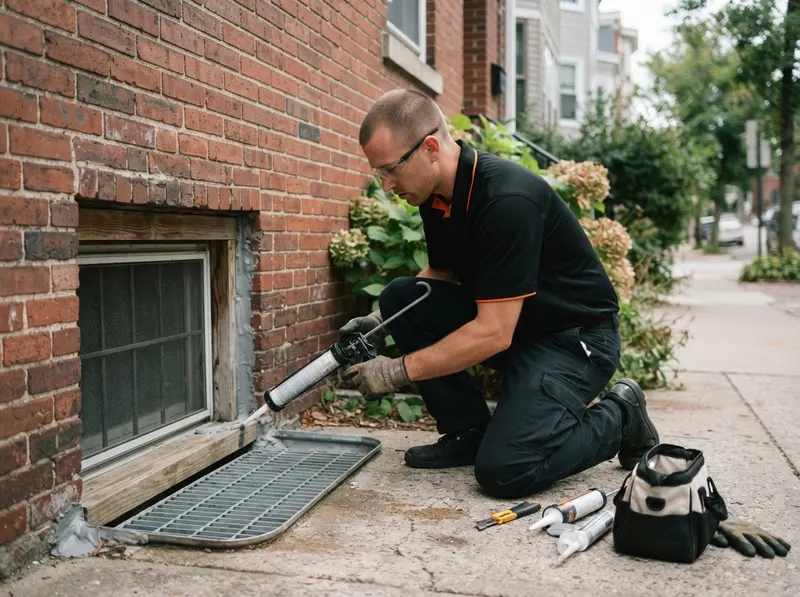
Residential rodent exclusion differs fundamentally from temporary baiting or broadcast rodenticides. Chemical applications reduce surface rodent counts temporarily inside living areas, but unsealed building perimeters allow exterior colonies from street alleys and municipal sewers to recolonize within weeks. Physical exclusion directly secures vulnerable structural junctions: fieldstone foundation mortar joints, degraded brick headers along sidewalk grades, and gaps around gas, water, or plumbing conduits. A field-tested barrier provides long-term sanitary protection, eliminating the risk of rodent carcasses decomposing behind historic lath-and-plaster walls or inside floor cavities.
In Suffolk County, regional architecture presents unique entry routes that standard spray services fail to address. Century-old rowhouses across the South End, Beacon Hill, and Back Bay frequently feature sub-sidewalk coal vaults, compromised granite curbing, and open exterior utility runs where cast-iron plumbing joins municipal infrastructure. Multi-family triple-deckers throughout Dorchester, Jamaica Plain, and East Boston often have settling balloon framing, daylight openings along sill plates, and loose bulkhead doors that allow brown rats (Rattus norvegicus) access directly to kitchen pantries. In coastal areas like Charlestown and South Boston, moisture degradation around granite foundations expands minor brick joints into 1/2-inch gaps, which mice navigate with minimal resistance.
Technicians follow an objective structural workflow to restore the protective boundary of the property. First, the exterior perimeter undergoes a 360-degree inspection from foundation soil up to 36 inches along the siding line. Second, technician teams mechanically clean and clear voids of nesting detritus, grease marks, and loose mortar. Third, technicians install 1/4-inch galvanized hardware cloth backed by non-shrink hydraulic cement or metal-reinforced sealant across every opening. Finally, interior utility raceways behind laundry appliances, radiator supply risers, and basement sills receive secondary physical barriers to isolate interior rooms entirely from unfinished foundation spaces.
Every job gets a firm, written price after a free on-site visit.
Tell us about your residential rodent exclusion job in Boston and we'll send a clear, written quote, usually the same day.
 Nuvexa Bug Control